


Ask any Indian exporter selling to the UK, and you’ll hear the same thing: the product gets interest, the pricing works, and then the logistics questions begin.
UK buyers want to know how predictable your shipments are, how clean your documentation is, and what happens when something goes off plan.
In this piece, we examine how UK businesses approach B2B logistics, why many Indian exporters struggle after their first shipment, and what it truly takes to scale exports sustainably.
The B2B Landscape in the UK
In the UK B2B landscape, the biggest shift from D2C is where responsibility sits. When selling to UK retailers or distributors, the buyer typically manages import customs clearance, VAT payments, warehousing, last-mile fulfilment, and even returns from end consumers.
As an exporter, your role is more focused but no less critical - you’re responsible for getting goods to the buyer’s warehouse or port on time, ensuring all export documentation is accurate, meeting UK product compliance requirements such as safety certifications and labelling, and adhering to agreed-upon delivery timelines.
Who are you selling to?
Independent retailers (boutiques, speciality stores)
Online marketplaces (Not On The High Street, Etsy wholesale)
Distributors (they sell to retailers)
Corporate buyers (hotels, offices, restaurants)
Subscription box companies
Meeting delivery timelines
B2B Shipping Models
In the UK B2B market, shipping models are usually straightforward but highly structured. The model you choose impacts pricing, risk, and how attractive you are to UK buyers.
Model 1: FOB (Free on Board) - India Port
Under the FOB model, your responsibility as an exporter ends once the goods are delivered to the Indian port, cleared for export, and loaded onto the vessel.
This typically includes transporting goods to ports such as Mumbai or Nhava Sheva, completing export customs clearance in India, and ensuring the shipment is appropriately handed over to the carrier.
From that point onward, the UK buyer takes over, covering sea or air freight costs, managing UK customs clearance and VAT payments, and arranging transport from the UK port to their warehouse.
When It Works:
Buyer has their own freight forwarder
Large, established retailers
Buyer wants control over shipping
International shipping experience on the buyer’s side
Pricing:
In an FOB arrangement, your quote covers only the cost of the product up to the Indian port. For example, you might quote FOB Mumbai at £15 per unit, which includes manufacturing, inland transport to the port, export customs clearance, and loading onto the vessel.
From there, the UK buyer calculates their own freight costs, insurance, import duties, VAT, and inland transport within the UK to arrive at their final landed cost.
Model 2: CIF (Cost, Insurance, Freight) - UK Port
Under the CIF model, the exporter takes responsibility beyond the Indian port and manages the international leg of the shipment. This includes everything covered under FOB, such as transporting goods to the Indian port, completing export customs clearance, and loading onto the vessel, along with arranging and paying for sea or air freight to the UK, and securing marine insurance for the shipment.
Your responsibility ends once the goods arrive at the UK port. From there, the UK buyer handles import customs clearance, pays applicable VAT and duties, and arranges onward transport from the port to their warehouse.
When It Works:
First-time UK buyers (less experienced)
You have better freight rates
You want to control the quality of shipping
Medium to large orders
Pricing:
In a CIF arrangement, your quote includes the product cost along with international freight and marine insurance up to the UK port. For example, you might quote CIF London at £18 per unit, which covers manufacturing, inland transport to the Indian port, export customs clearance, sea or air freight to London, and insurance during transit.
The UK buyer then takes over responsibility for import customs clearance, payment of duties and VAT, and inland transport from the port to their warehouse.
Model 3: DDP (Delivered Duty Paid) - Buyer’s Warehouse
Your Responsibility:
Everything in CIF, plus:
UK customs clearance
Pay UK import duties and VAT (which the buyer reimburses)
Inland transport to the buyer’s warehouse
Delivered to their door
Buyer’s Responsibility:
Receive goods and pay you
When It Works:
Smaller retailers with no import experience
High-margin products where you can absorb logistics complexity
You want to offer the “easiest possible” buying experience
Building relationships with new buyers
Pricing: You quote: DDP London (delivered to buyer’s warehouse) - £22 per unit (all-in price)
Pro Tip for B2B: Start with DDP for your first few orders to new buyers. Once the relationship is established and they trust you, shift to CIF or FOB to reduce your logistics burden.
B2B Shipping Options from India to the UK
Sea Freight (Most Common for B2B)
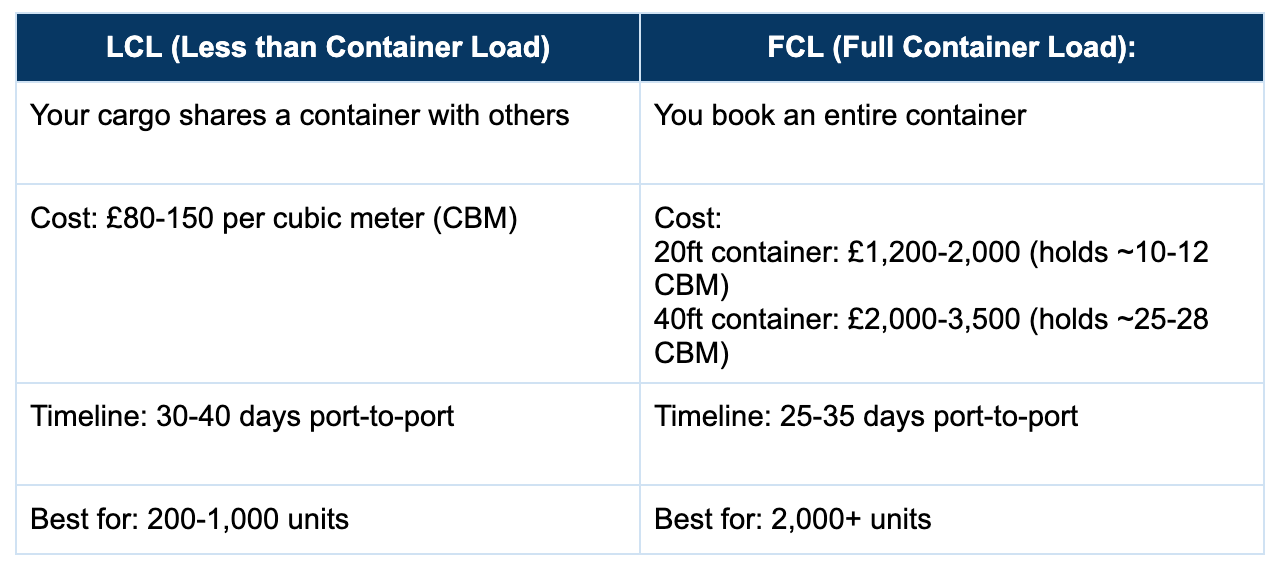
Sea freight is the most common option for B2B shipments. Full Container Load (FCL) is best suited for large, repeat orders where the volume justifies a dedicated container, while Less than Container Load (LCL) is ideal for smaller or trial shipments.
Air Freight (For Urgent B2B Orders)
Air freight is typically used for urgent B2B shipments from India to the UK, where speed and reliability are more important than cost. It’s common for fast-moving SKUs, time-sensitive retail launches, subscription box replenishments, or situations where stockouts could disrupt a UK buyer’s operations.
While air freight is significantly more expensive than sea freight, it offers shorter transit times, fewer handover points, and more reliable delivery windows.
Cost: ₹200-300 per kg
Timeline: 5-7 days airport-to-airport
Best for: Urgent restocks, samples, high-value low-weight items
B2B Documentation: What Your Buyer Needs?
Unlike D2C, where couriers handle most paperwork, B2B requires a more hands-on approach.
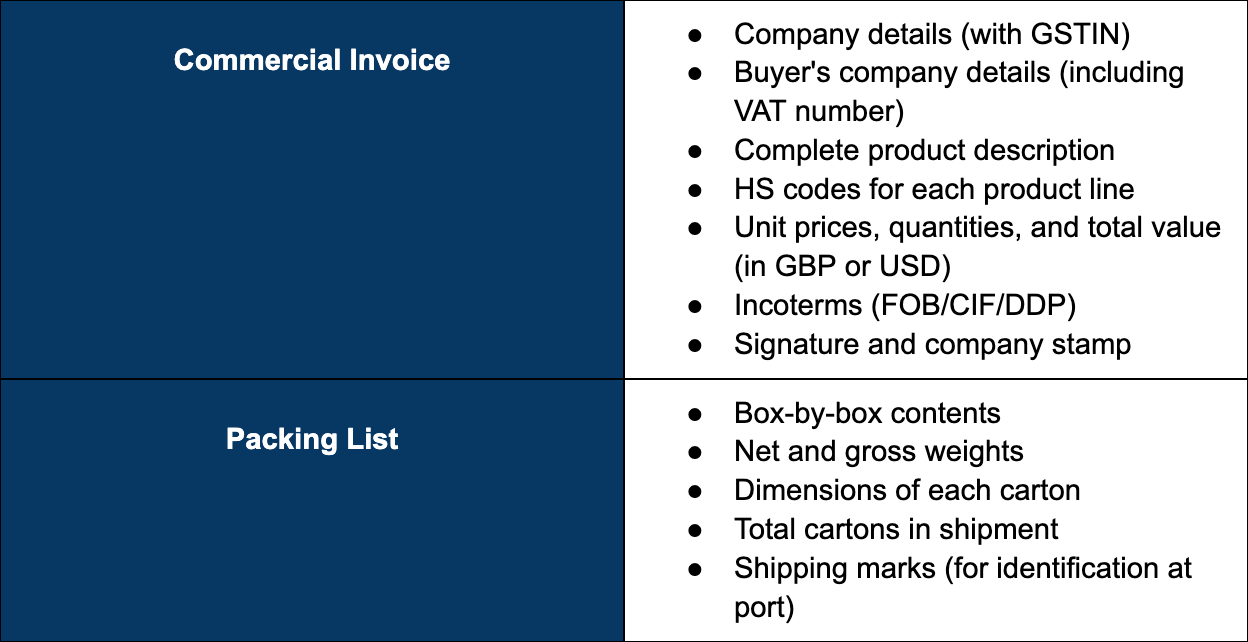
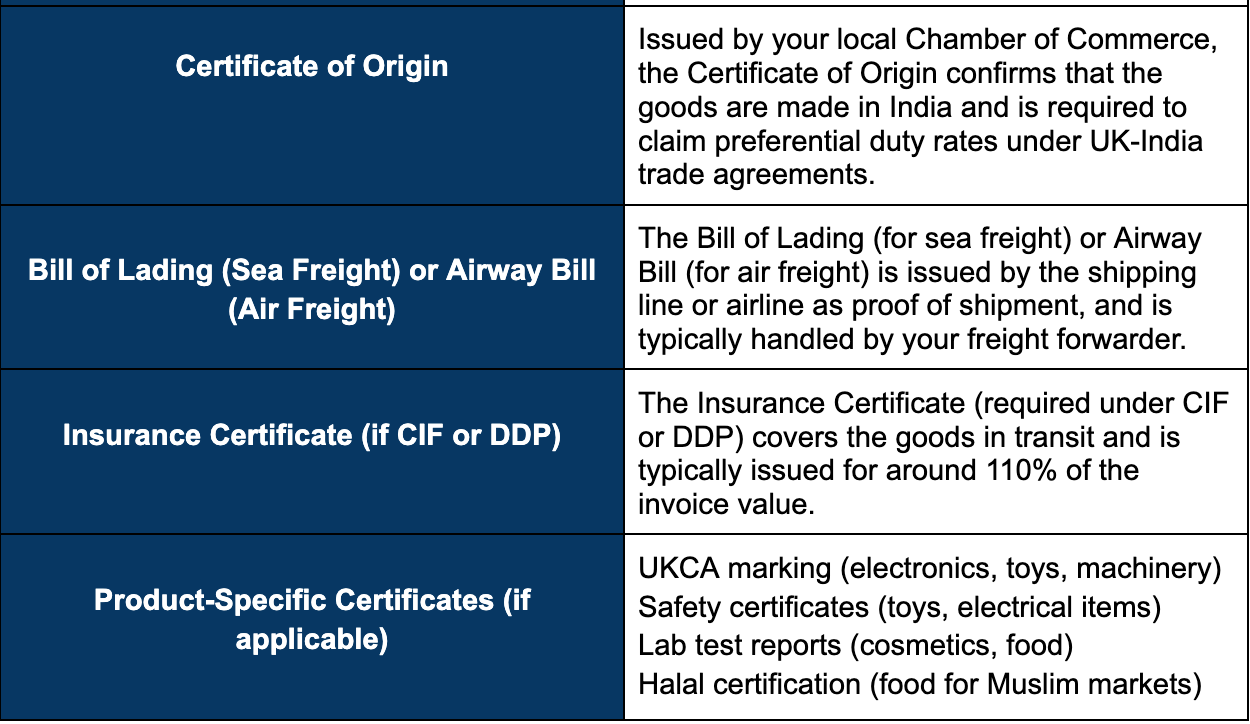
Essential Documents:
Pro Tip: Create a “master pack” template with all recurring documents. For each shipment, just update quantities, values, and dates. Saves hours.
B2B Customs Clearance
When your shipment arrives at a UK port, here’s what happens:
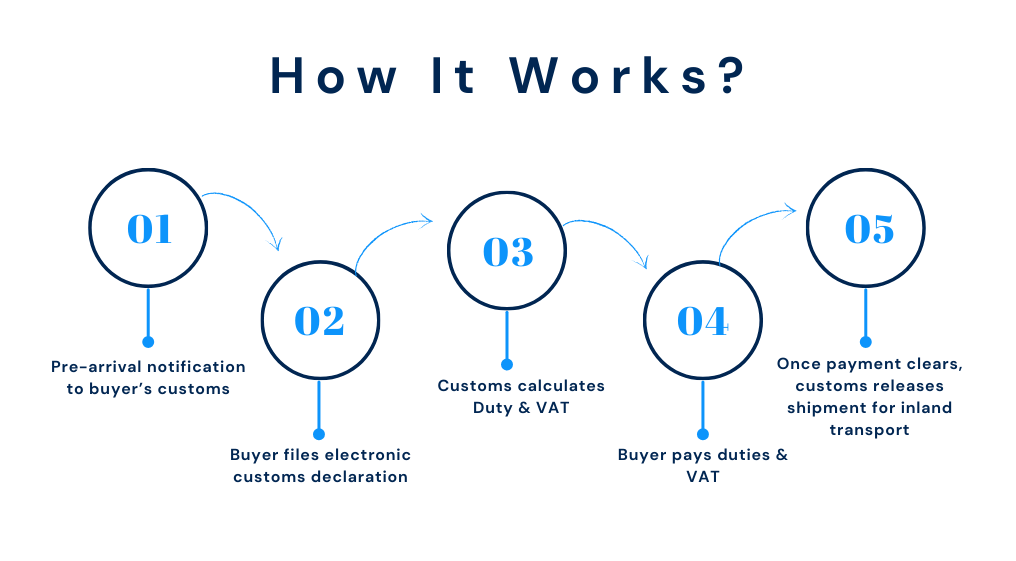
After port arrival, UK customs clearance and warehouse delivery usually take 2–5 working days. Delays commonly occur due to incorrect HS codes, undervaluation, missing regulatory certificates, first-time import checks, or high-risk products such as food, cosmetics, and electronics.
B2B Freight Forwarders
Unlike D2C, where couriers manage the entire journey, B2B shipping relies on freight forwarders. They book sea or air freight, handle export customs in India, arrange cargo insurance, issue shipping documents, track shipments, and if you’re shipping DDP, coordinate with UK customs to ensure smooth clearance.
Top Freight Forwarders for India-UK: Jeena & Company, KWE India, Flexport (tech-forward, suitable for startups), DHL Global Forwarding, Kuehne + Nagel, etc.
Cost Breakdown: Freight Forwarding
Documentation: ₹5,000-15,000 per shipment
Export customs clearance: ₹3,000-8,000
Freight booking: (usually included or small markup)
How to Choose the Right Freight Forwarder?
Get 3 quotes for your first shipment
Ask for references from other exporters
Check response time and communication
Compare door-to-door quotes (easier to evaluate)
Your B2B focused UK Logistics Checklist
Decide on Incoterms (FOB, CIF, or DDP)
Select a reliable freight forwarder
Prepare all export documentation templates
Obtain a Certificate of Origin from the Chamber of Commerce
Confirm product compliance requirements
Negotiate payment terms with the buyer
Set up trade insurance (if needed)
Calculate the all-in landed cost for the buyer
Final Thoughts
Retailers, distributors, and corporate buyers operate with tight margins and little tolerance for surprises. When shipments arrive on time, documents are clean, and responsibilities are clearly defined, logistics fades into the background, and that’s precisely what UK buyers want.
The choice of shipping model (FOB vs. CIF vs. DDP), the quality of your freight forwarder, and the accuracy of your documentation all directly influence whether a buyer transitions from a trial order to a long-term contract.
Don’t optimise for the cheapest shipment. Optimise for the least follow-ups.
Related Articles


Dive into Vault today & unlock a world of possibilities.