


Your first UK orders are in. Exciting, right? Until you realise that getting them from your warehouse to a doorstep in London isn’t quite as simple as it sounds.
Brexit has turned UK logistics into a maze of customs codes, duties, and paperwork. And British customers? They expect next-day delivery like clockwork. It’s no wonder many first-time exporters lose sleep over this stage.
In this guide, we’ll break down the changes that occurred after Brexit, the differences between various fulfilments for D2C products, and how to stay compliant throughout.
Understanding the UK Logistics Landscape Post-Brexit
Before we dive deeper, let’s level-set on what Brexit means for your shipments.
Before Brexit- that is, before January 2021- shipping to the UK was relatively straightforward. The country was part of the European Union’s customs union, which meant goods could move freely across borders without the need for customs declarations. VAT handling was simpler and harmonised across EU member states, making compliance easier for exporters.
Post-Brexit, the picture looks very different. The UK is now a completely separate customs territory, with its own rules, paperwork, and tax structures. Every shipment requires complete customs declarations, even for goods coming from EU countries. There are also new VAT regulations, especially for low-value consignments under £135, where sellers may now be required to collect VAT at the point of sale.
What does this mean for you?
More documentation required
Potential for delays at customs
VAT complexity (you might need to collect and remit it)
Need for GB EORI number if shipping regularly
Increased costs (admin, broker fees, potential duties)
D2C Models for Shipping
D2C is attractive: higher margins, direct customer relationships, brand control. But it comes with logistics complexity that B2B doesn’t have.
The Two D2C Models
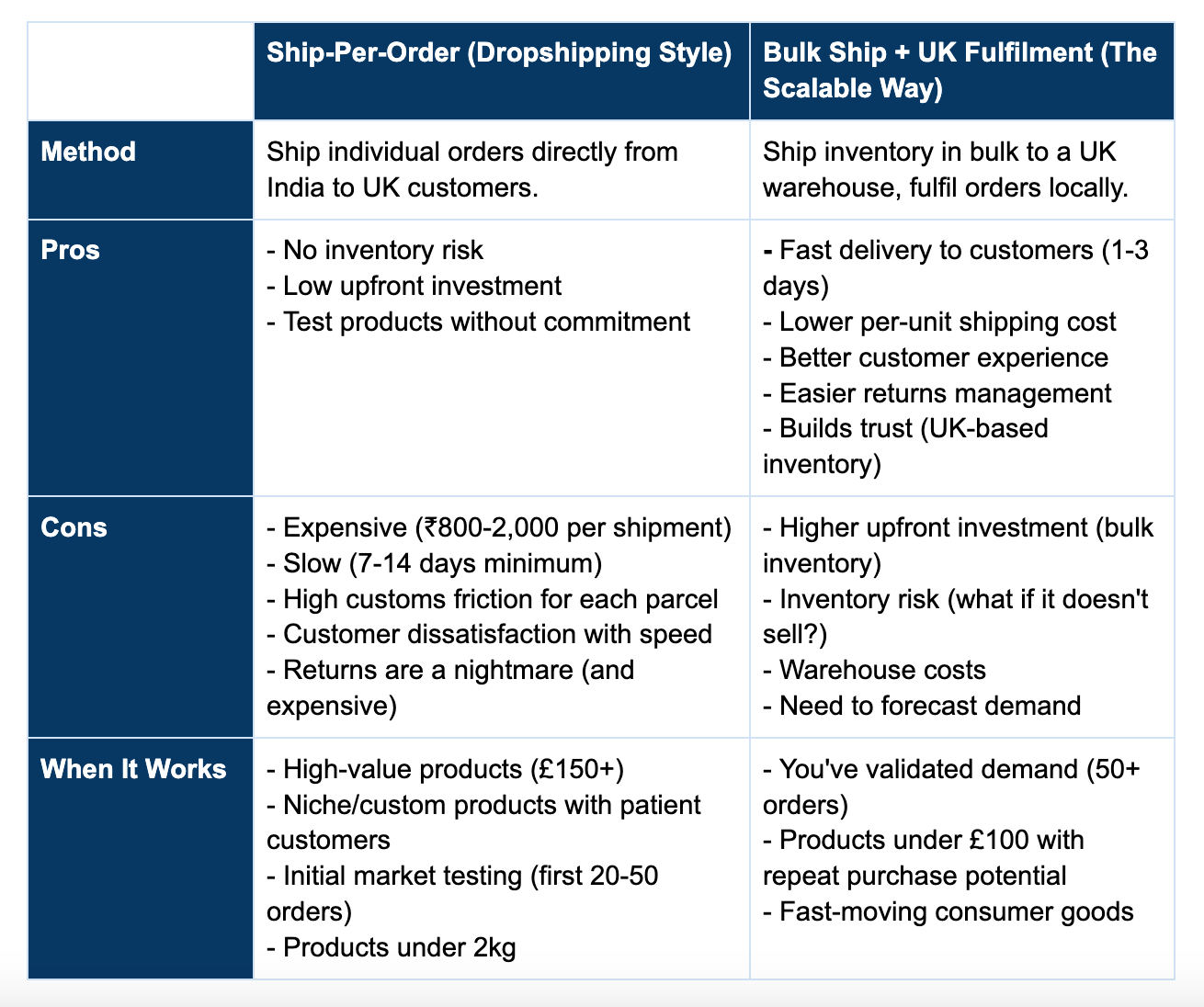
D2C Shipping Options (India to UK)
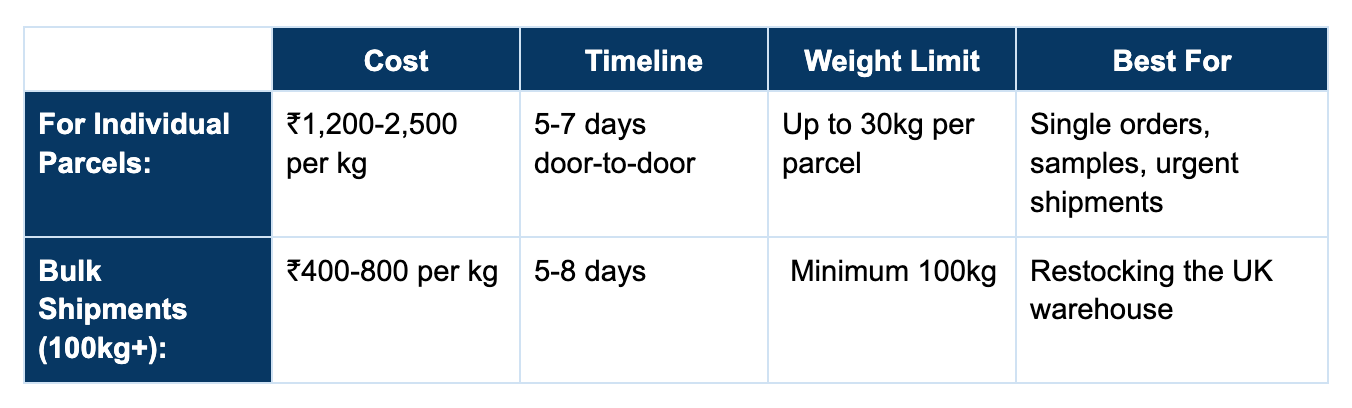
D2C Shipping Options from India to the UK include a mix of postal, express courier, and third-party fulfilment providers, each suited for different order volumes and delivery expectations. So, choose the correct option based on factors such as product category, shipping budget, delivery timelines, customs requirements, and customer expectations.
Option 1: International Couriers (DHL, FedEx, UPS, Aramex)
Option 2: India Post (EMS/Registered Post)
India Post (EMS/Registered Post) is one of the most cost-effective options for D2C brands shipping smaller parcels or low-value products from India to the UK. EMS offers faster delivery and end-to-end tracking, while Registered Post is slower but even more affordable for lightweight shipments.

Option 3: Freight Forwarders (Sea/Air Freight)
Freight Forwarders (Sea/Air Freight) are best suited for D2C brands shipping bulk inventory to the UK, rather than sending individual parcels. Air freight is faster, while sea freight offers the lowest cost per unit. This option helps reduce overall shipping expenses, improves delivery speed once stock is in a UK warehouse, and makes returns easier- ideal for brands ready to scale.
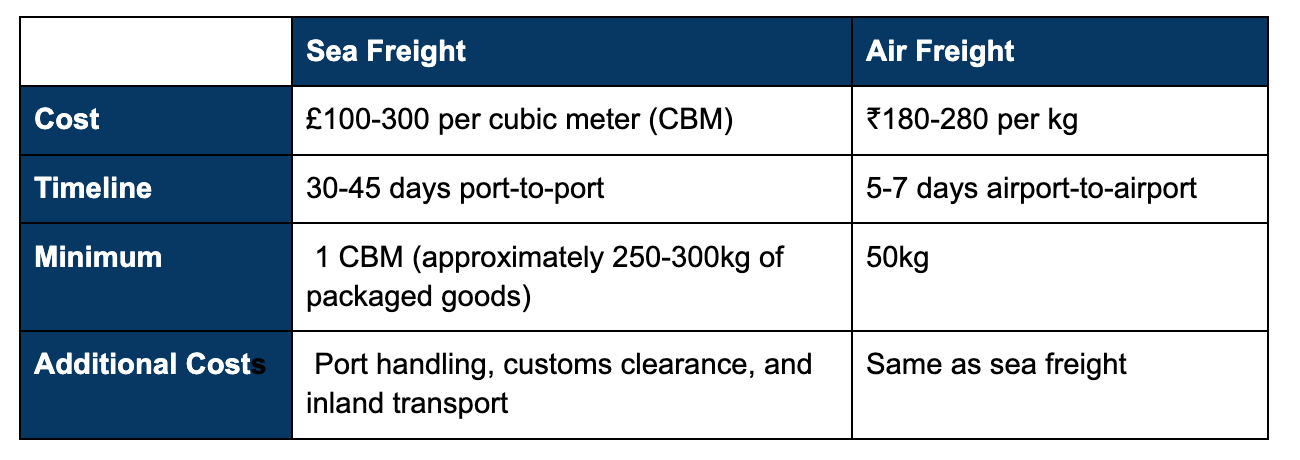
Let’s take an example to understand the total landed cost for sea freight and see how it impacts your per-unit pricing for shipping 500 units (300kg) to the UK warehouse.
Sea freight: £200
Port charges: £150
Customs clearance: £80
Inland transport to the warehouse: £100
Total: £530 or approximately £1.06 per unit
Best for: Bulk inventory shipments to UK warehouse (not individual orders)
D2C Fulfilment Options in the UK
D2C Fulfilment Options in the UK include a range of third-party logistics (3PL) partners and fulfilment centres that store your inventory, pick and pack orders, handle last-mile delivery, and manage returns on your behalf.
This approach is beneficial for Indian D2C brands selling consistently in the UK, as it reduces shipping time from weeks to just 1–3 days for local delivery.
Option 1: Amazon FBA (Fulfilment by Amazon)
With Amazon FBA in the UK, you ship bulk inventory to an Amazon UK warehouse, where Amazon stores your products and takes care of the entire fulfilment process- picking, packing, and shipping orders directly to customers. Amazon also manages customer service and returns, removing a major operational burden for D2C brands.
Plus, your products become eligible for Prime delivery, which acts as a strong trust signal and can significantly boost conversions and repeat purchases.
Costs:
Storage: £0.60-1.20 per cubic foot/month (seasonal variation)
Fulfilment: £2.00-3.50 per standard-size item
Long-term storage fees: Extra charges for inventory over 365 days
Return processing: £1.50-2.50 per item
Pros & Cons
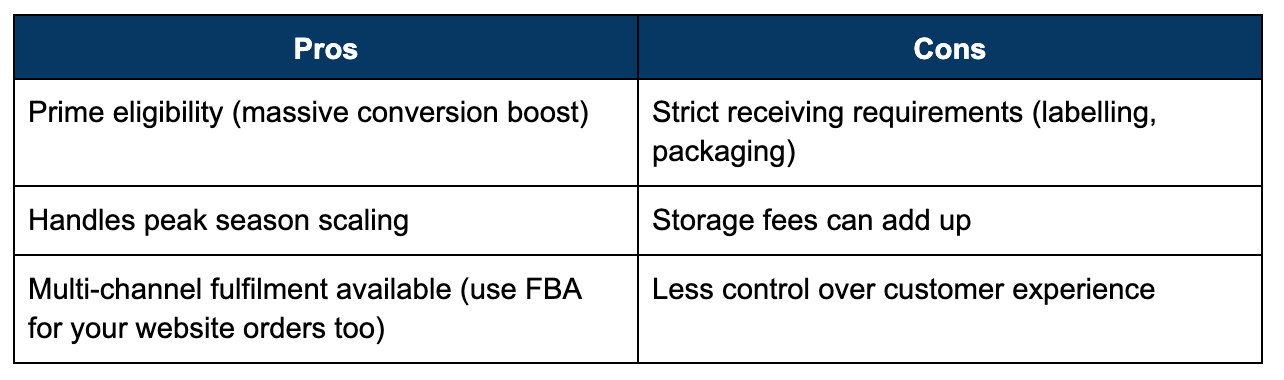
Best for: Products selling on Amazon UK, brands comfortable with the Amazon ecosystem
How does it work?
From India, you’ll ship to Amazon’s designated UK fulfilment centres. Typical process:
Create a shipping plan in Seller Central
Ship bulk inventory (air or sea freight)
Amazon receives and checks the inventory
Products go live for Prime delivery
It takes around 35–50 days by sea freight or 10–15 days by air freight for products shipped from India to go live on Amazon.
Option 2: Third-Party Logistics (3PL) Providers
A 3PL (Third-Party Logistics) provider is a fulfilment partner that stores your inventory and handles picking, packing, and shipping orders on your behalf. For Indian brands expanding into the UK, popular 3PL options include ShipBob, Huboo, James and James Fulfilment, and Bezos.ai (well known for its Shopify-focused capabilities).
The workflow is simple: you ship your inventory to the 3PL’s UK warehouse, integrate your Shopify or WooCommerce store, and they manage order fulfilment end-to-end.
Many of these providers also offer multi-channel fulfilment, meaning they can ship orders not only for your own D2C site but also for platforms like Amazon and eBay, allowing your brand to scale in the UK without running your own warehouse.
Costs:
Receiving: £20-50 per pallet
Storage: £8-15 per pallet per week
Pick and pack: £2.00-4.00 per order
Shipping: £3-6 per parcel (they negotiate better rates)
Pros & Cons
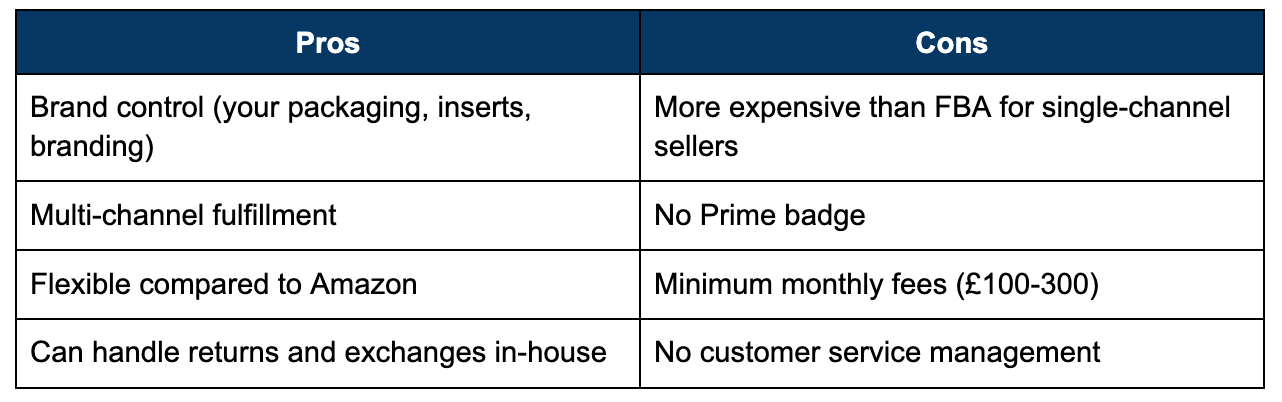
Best for: D2C brands with strong Shopify presence, multi-channel sellers, brands needing custom packaging/inserts
Option 3: Self-Fulfilment (UK Address + Partner/Agent)
With this model, you either rent a small storage space in the UK or partner with a trusted friend, relative, or local agent who can act as your fulfilment point. Your bulk inventory is shipped to that UK address, and once orders come in, you (or your partner/agent) manually pick, pack, and ship them to customers.
This approach gives you more control over packaging and delivery, and can be cost-effective in the early stages, especially for lower order volumes.
Costs:
Storage: £500-1,500/month (small commercial space)
Partner/agent fee: £500-2,000/month
Shipping: £3-8 per parcel (Royal Mail, DPD, Evri)
Pros & Cons

Best for: Very early stage (first 100-200 orders), brands wanting complete control, low volume/high margin products
D2C Customs & VAT
When shipping D2C products from India to the UK, you’ll need to factor in customs duties, import VAT, and HS code classification to ensure smooth border clearance. The UK typically charges import VAT on the customs value of your goods (product cost + shipping + insurance), and depending on your product category, customs duty may also apply.
For Shipments Under £135 (Per Parcel):
Register for UK VAT (even as a non-UK business)
Charge VAT at checkout (20%)
Remit VAT to HMRC quarterly
Charge no customs duty to the customer
For Shipments Over £135 (Per Parcel):
Customs duty applies (0-12% depending on HS code)
VAT charged at 20% on (CIF value + duty)
A courier typically advances payment and bills the recipient
You declare the goods via a customs declaration
Pro Tip: If you’re shipping bulk to a UK warehouse, ship everything in one consignment over £135. Your UK warehouse/3PL handles customs clearance once, and then you fulfil orders domestically (no more customs per order).
How to Register for UK VAT?
Register directly through the HMRC online portal using a Government Gateway account. Documents you may need to register:
Certificate of incorporation
Business address & contact details
Director/Shareholder identity details
Estimated sales and business activity description
Bank account details (UK or international, depending on setup)
Costs vary depending on the complexity of your business, product category, and whether EORI support, returns filing, and bookkeeping are bundled. It would be £0 (DIY) or £500-2,000 (via an accountant).
Typical processing time is 4-8 weeks to receive a VAT Registration Number (VRN). VAT returns are generally filed every quarter (usually 4 times per year).
D2C Returns
UK online shoppers are protected by a 14-day cooling-off period under distance selling rules, which means they can return a product for any reason within 14 days of receiving it (Distance Selling Regulations). They can return anything, for any reason. Return rates differ across product categories:
Fashion/apparel: 15-30%
Footwear: 20-35%
Electronics: 5-10%
Home goods: 8-12%
Beauty/cosmetics: 10-15%
Returns Strategy
If you’re selling D2C in the UK, you’ll quickly learn one universal truth: returns are part of the business model, not a mistake. Customers change their minds, sizing varies, and expectations shift- so a thoughtful returns strategy is just as important as your shipping strategy.
Option 1: UK Return Address (Recommended)
Provide a UK return address (your 3PL or partner)
Customer returns domestically (cheap for them, better experience)
Inspect returned goods & restock if in good condition
Cost: £8-12 per return (reverse logistics + inspection)
Option 2: Return to India (Not Recommended)
Customer ships back to India
Expensive for the customer (£20-40)
Slow (15-30 days)
Potential customs issues on returns
Best Practice: Offer free UK returns for orders over £50. Build the cost into your margins (assume 10% return rate). It’s cheaper than negative reviews and lost customers.
Your UK Logistics Checklist
Decide on the ship-per-order vs bulk shipment model
Register for UK VAT (if shipping orders under £135)
Select fulfilment partner (FBA, 3PL, or self-fulfil)
Set up the UK returns process and address
Test end-to-end delivery time
Calculate the true landed cost per unit
Create branded packaging for the UK market
Final Thoughts
Let’s be honest: logistics is rarely anyone’s favourite part of going global. But in the UK market, it’s the engine that keeps your business running. If it breaks, everything feels harder- refunds go up, reviews go down, and margins disappear fast.
Start with the basics, learn from every shipment, and improve as you go. Your first batch might be messy. That’s okay. Every founder goes through it. By your tenth shipment, you’ll have your own playbook.
So, get your logistics right because you’re building a brand that lasts, a business that can scale beyond India, and a presence in one of the most valuable eCommerce markets in the world.
Next up: UK B2B Logistics - we’ll dive deep into documentation, duties, and how to clear customs smoothly for Indian B2B businesses exporting to the UK, every single time.
Related Articles


Dive into Vault today & unlock a world of possibilities.
Wow, the customs maze sounds more complicated then a plot twist in my book.