


You launch ads, refresh the dashboard every few hours, and ask yourself a familiar set of questions: Why did this ad work yesterday and stop today? Should I increase the budget or pause everything? For many founders, performance marketing feels less like a growth engine and more like a daily stress test on cash flow, confidence, and patience.
It brings in your earliest customers, but it also exposes every weakness- unclear positioning, fragile margins, slow deliveries, or weak retention. When ads work, growth feels magical. When they don’t, the business can feel broken overnight. A good rule of thumb is: If you can’t explain why a campaign is working, you’re not ready to scale it.
This article breaks down performance marketing for D2C brands end-to-end: what it really means, how the funnel works, how much to spend, which metrics matter, common mistakes, and where the ecosystem is heading next.
The Core Performance Marketing Funnel for D2C
Performance marketing for D2C works best when structured as a full-funnel system, not a single conversion-focused campaign.
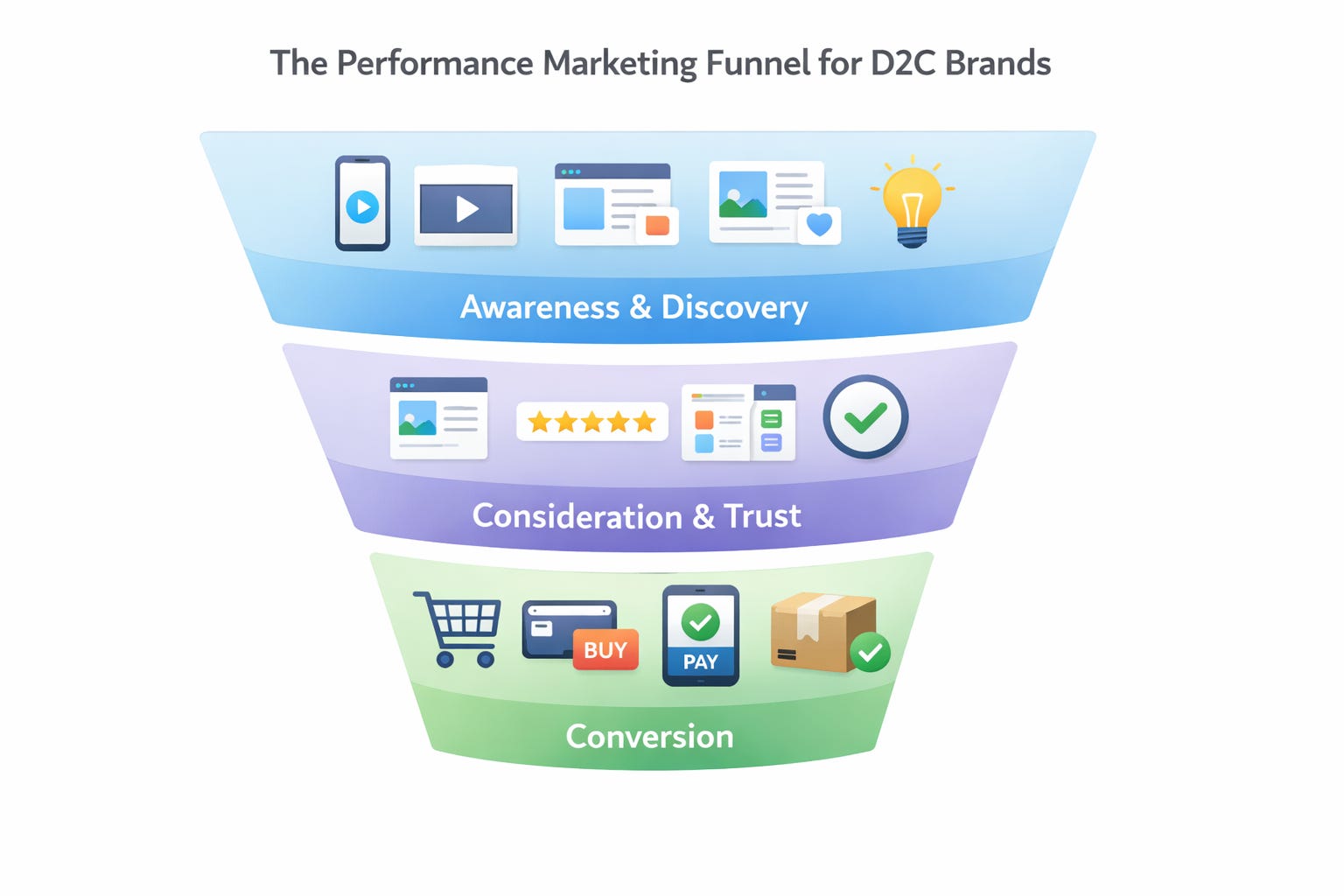
1. Top of Funnel: Awareness & Discovery
At the top of the funnel, the objective is to introduce the brand and product to new audiences. Most users here are not actively shopping; they are scrolling. The role of performance marketing is to earn attention quickly and create curiosity.
Short-form videos, UGC-style creatives, founder stories, and problem-led hooks perform well at this stage because they feel native to social feeds.
Measurement at the top of the funnel appears very different from that at lower stages. Sales and ROAS are not the proper yardsticks here. Instead, brands should track signals such as reach, cost per thousand impressions (CPM), video watch time, engagement, and click-through rate.
These metrics indicate whether the content is resonating and whether the platform is finding the right audiences for your message. Strong engagement here means the algorithm has better signals to work with, which improves performance across the rest of the funnel.
2. Mid Funnel: Consideration & Trust
The mid-funnel is where most D2C brands win or lose. Users here are aware of the brand but undecided. Performance marketing now shifts from interruption to persuasion. Ads focus on education, benefits, differentiation, reviews, testimonials, comparisons, and real-world usage.
Retargeting plays a central role in mid-funnel performance marketing. Instead of broadcasting a single message to everyone, brands tailor their messaging to users based on their level of intent. Someone who watched a video may see a product explainer, while someone who visited a product page might be shown reviews or FAQs. This tailored messaging is what turns passive interest into genuine consideration.
Metrics such as landing page views, time spent on site, add-to-cart rate, and depth of engagement provide better signals of whether persuasion is working.
3. Bottom of Funnel: Conversion
Bottom-funnel campaigns are designed to convert high-intent users into customers. These ads often include offers, urgency reminders, dynamic product ads, and cart abandonment nudges. At this stage, pricing clarity, payment options, delivery timelines, and checkout experience matter as much as the ad itself.
Measurement at the bottom of the funnel becomes more outcome-focused. Metrics such as cost per acquisition (CPA), conversion rate, and return on ad spend (ROAS) are closely tracked because they directly reflect the efficiency with which ads drive sales.
That said, mature D2C brands look beyond surface-level efficiency. They also monitor contribution margin and payback period to understand whether the customers acquired today will generate profitable returns over time.
Modern performance marketing does not stop at purchase. Retention-focused ads, cross-sell campaigns, subscriptions, and loyalty nudges turn first-time buyers into repeat customers. Retention improves lifetime value (LTV), lowers blended CAC, and unlocks more aggressive acquisition at scale.
How Much Should D2C Brands Spend on Performance Marketing?
The right spend depends on the stage of the brand, clarity of unit economics, and the objective of the campaigns. Early spend is intended to facilitate learning, mid-stage spend is designed to establish repeatability, and late-stage spend is aimed at unlocking scale.
Stage 1: Validation Spend
A large number of early-stage D2C brands start performance marketing with less than ₹50,000 a month. This usually happens before funding, before predictable revenue, or while founders are still validating demand. While this budget is not ideal for full-scale performance marketing, it can still be helpful.
At this level, focus on one platform, one objective, and very few creatives.
Choose a single primary channel (usually Meta)
Run 1–2 campaigns max
Test 3–5 creatives instead of spreading thin
Optimise for traffic, engagement, or video views, not purchases
Avoid daily budget changes
Stage 2: Starting Spend ( Learning Phase)
At the earliest stage, D2C brands should typically start with a monthly performance marketing budget of ₹50,000 to ₹1,00,000. This is the minimum range required for ad platforms to generate meaningful data and exit the learning phase.
At this stage, brands should focus on one primary channel, usually Meta ads, and resist the urge to test everything at once.
What this spending is meant to achieve:
Validate paid demand for the product
Identify early winning creatives and hooks
Understand baseline CAC and CTR benchmarks
Test pricing and offer sensitivity
Stage 3: Early Scale Spend (Structure & Repeatability)
Once a brand sees consistent purchases and early signals of repeat demand, budgets can be increased to the ₹2-5 lakh per month range. This phase involves transitioning from experimentation to structured performance marketing.
At this level, brands should start layering Google Search or Shopping ads alongside social discovery, while continuing aggressive creative testing. ROAS may fluctuate during this phase, but that volatility is part of discovering scalable combinations.
Recommended spend split at this stage:
40–50% on top-of-funnel discovery and video
25–35% on mid-funnel education and trust-building
20–30% on bottom-funnel retargeting and conversions
Stage 4: Scale Spend (Growth With Control)
When a D2C brand reaches predictable revenue and has confidence in its margins and supply chain, performance marketing spend can scale to ₹10 lakh per month and beyond.
At this stage, decisions are no longer driven by individual campaign ROAS but by blended CAC, contribution margin, and payback period.
A common mistake is starting with too little spend (no learning) or scaling too fast (no control). The right mindset is to spend to learn first, scale second.
Performance Marketing Platforms for D2C Brands
Performance marketing platforms are the execution layer of your growth strategy. Each platform plays a different role in the funnel- some create demand, some capture intent, and others improve conversion or retention.
Below is a clear breakdown of the key performance marketing platforms that D2C brands use today, along with when to use each.
Meta Ads (Instagram & Facebook)
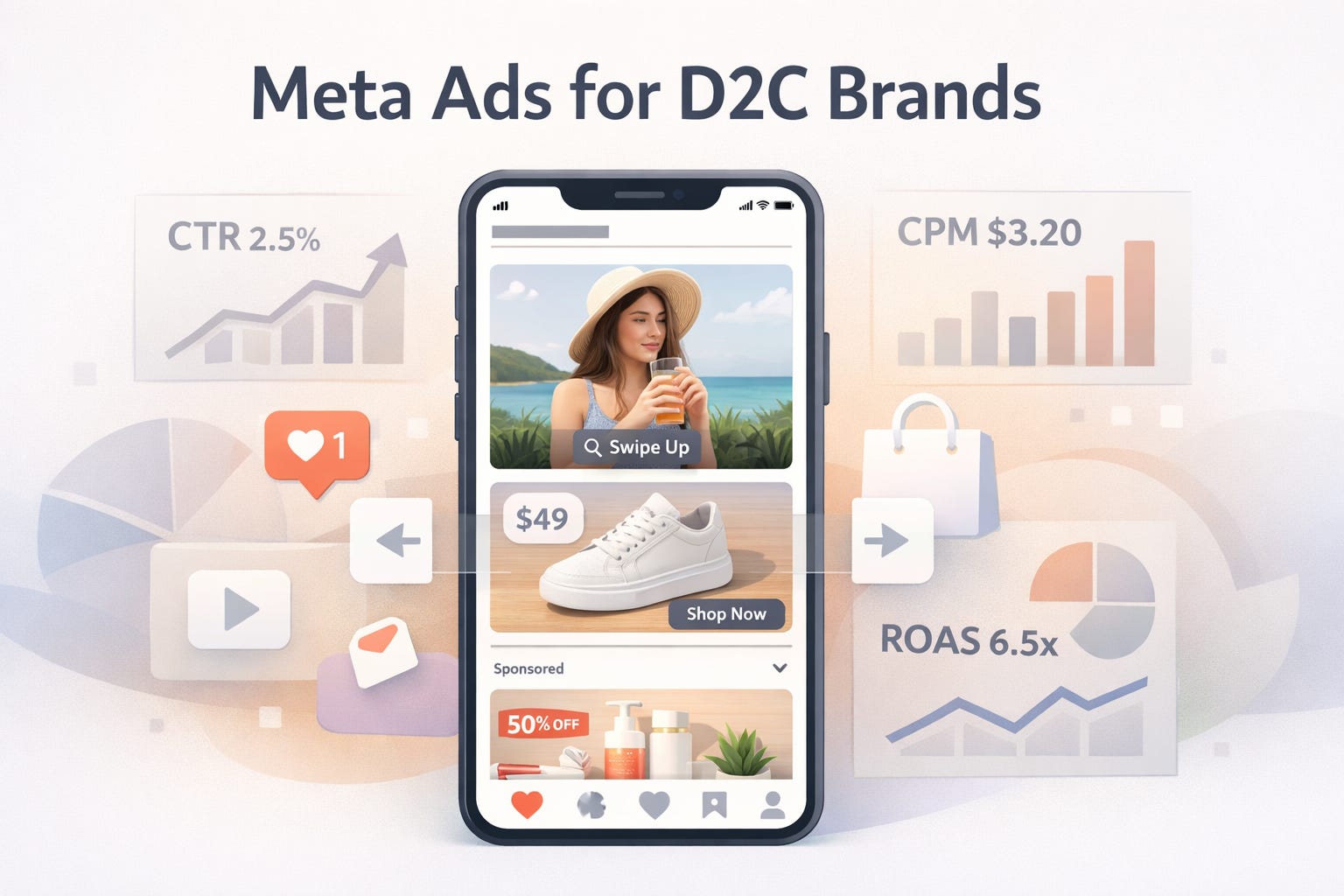
Meta is the most widely used performance marketing platform for D2C brands. It excels at discovery and scale, making it ideal for visually driven categories like fashion, beauty, food, and lifestyle.
Meta works best when brands invest in strong creatives- short videos, UGC-style ads, founder stories, and customer testimonials.
Google Ads (Search, Shopping & YouTube)
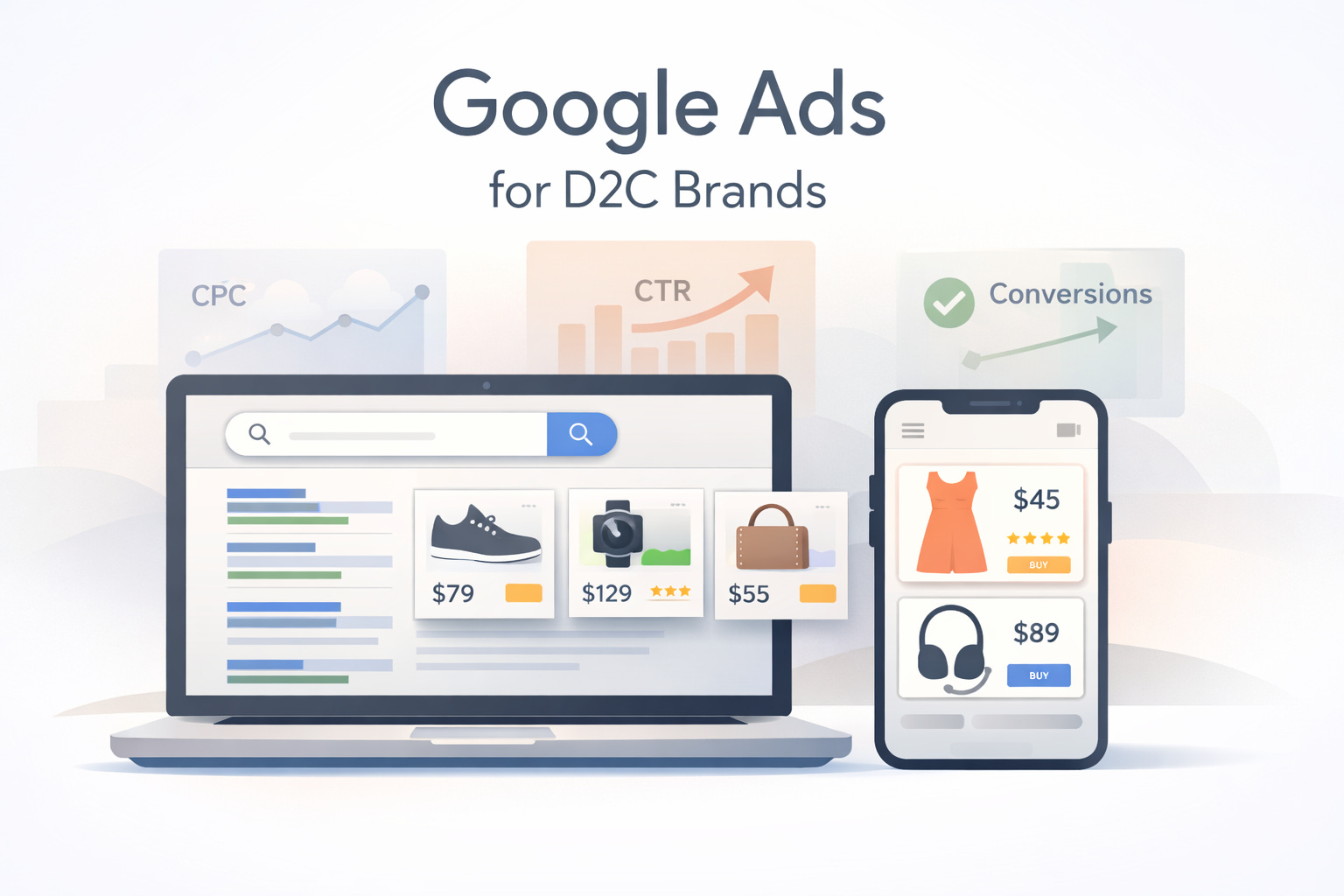
Google is the strongest platform for high-intent performance marketing. Users searching on Google already have an intent, which makes conversions more predictable than those from social discovery.
Google Search and Shopping are particularly effective for branded queries, problem-aware categories, and products with a high Average Order Value (AOV).
Marketplace Ad Platforms (Amazon, Flipkart)
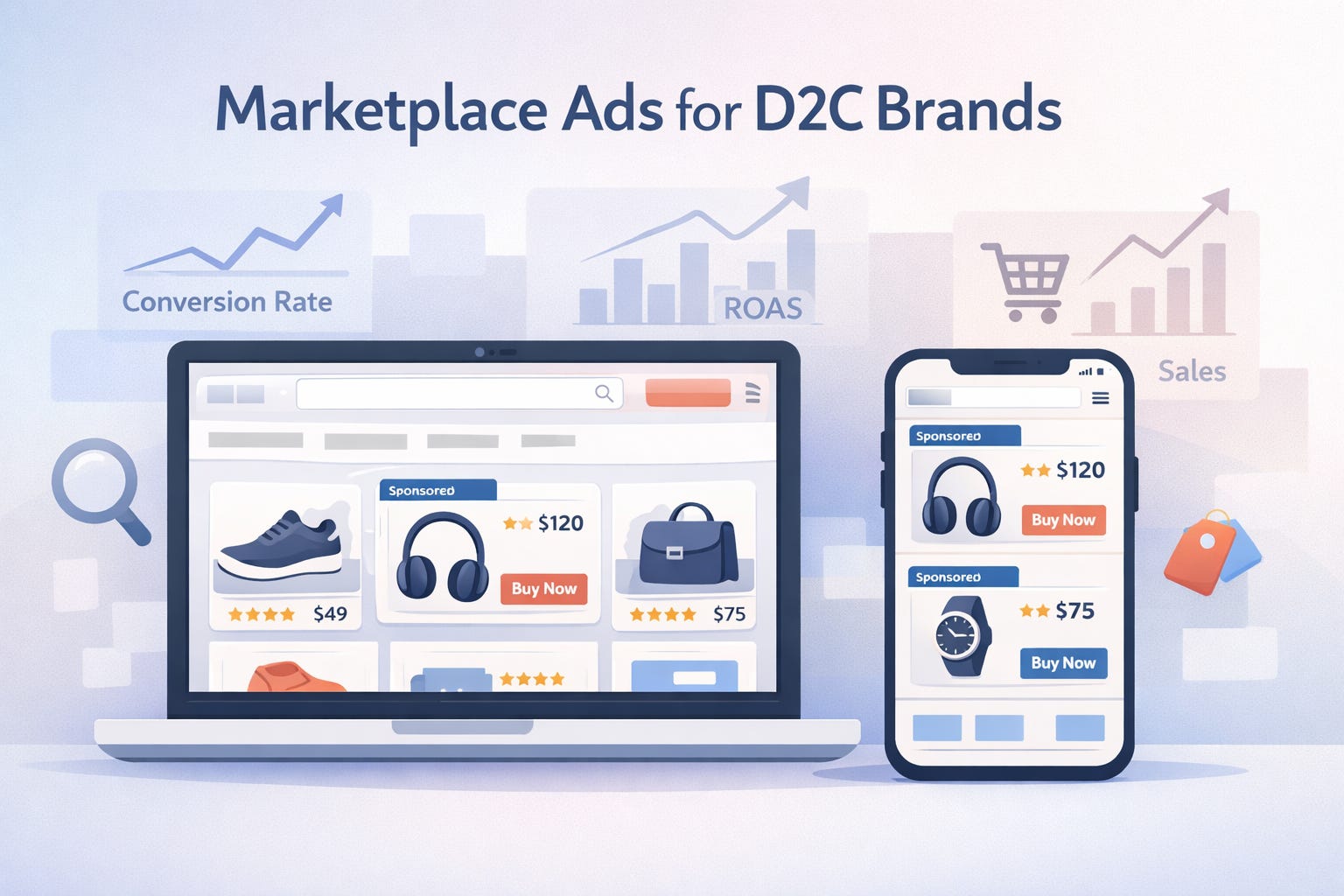
Amazon and Flipkart serve as performance channels within the buying environment. Users here are already in shopping mode, which improves conversion rates.
D2C brands commonly use Marketplace ads to capture demand and build early sales velocity. However, margins are lower and first-party data is limited.
Reddit Ads
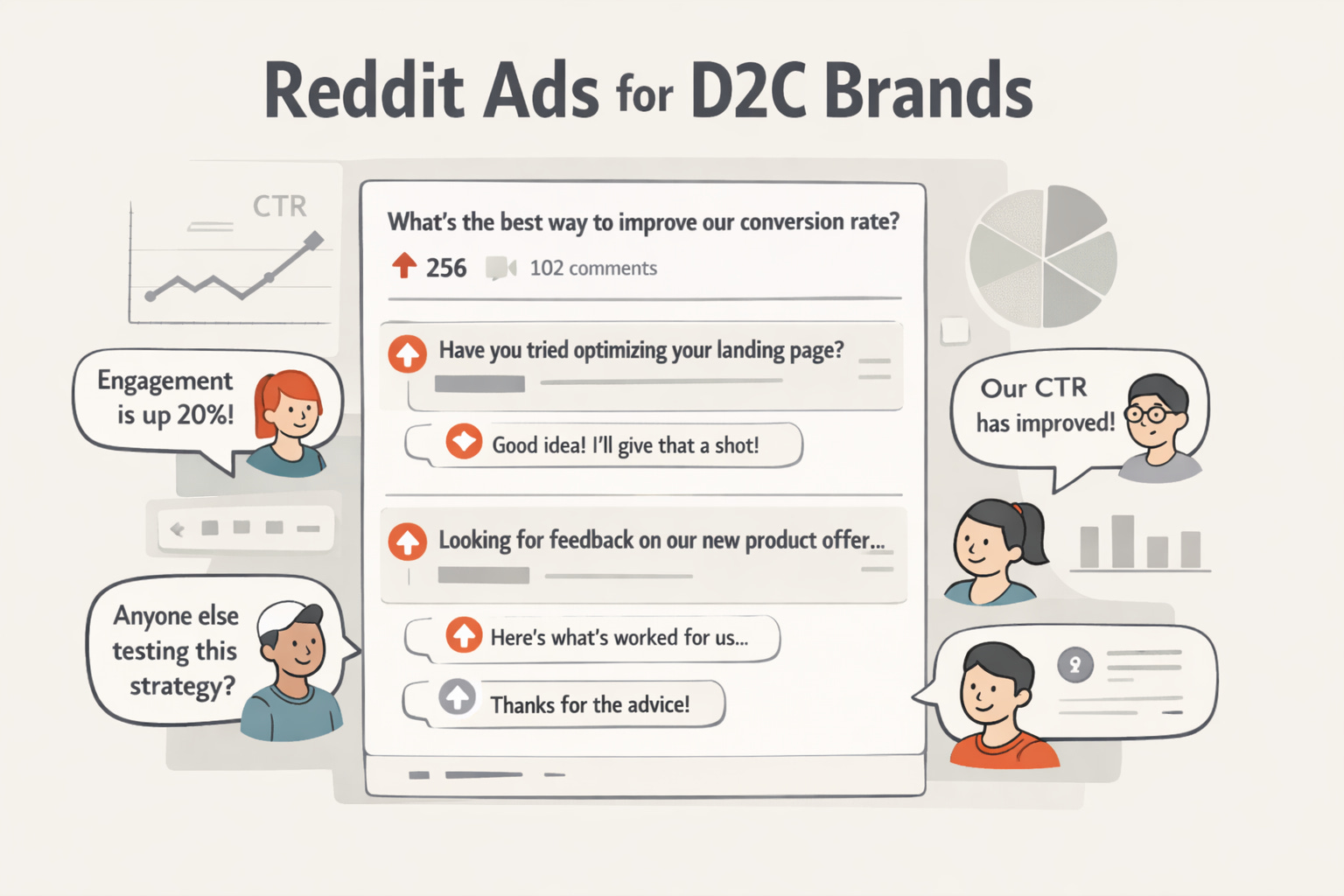
Reddit is very different from most performance marketing platforms, and that’s exactly why it can work. Unlike Instagram or Facebook, Reddit is not built around influencers or polished content. It’s built around communities, opinions, and honest conversations.
Reddit ads appear as Promoted Posts within specific subreddits (communities) or across broader interest categories. These ads blend into the feed and look similar to regular posts, which makes copy and tone extremely important. Targeting is primarily done through:
Subreddits (e.g., skincare, fitness, startups)
Interests
Keywords
Location and device
Performance Marketing Tools for Beginners
1. Analytics & Tracking Tools
These help you measure performance, user behaviour, and conversions across ads and your website.

2. Ad Creation & Design Tools

3. Paid Advertising Platforms (Beginner-Friendly)

4. Keyword & Market Research Tools

5. Automation & Workflow Tools

6. Reporting & Dashboard Tools

Key Metrics for Performance Marketing
While ROAS is useful, it is not sufficient on its own. Strong D2C performance marketing teams track:
1. Customer Acquisition Cost (CAC)
CAC shows how much it truly costs to acquire a customer, not just in ad spend but also factoring in discounts, shipping subsidies, and acquisition-related overheads. A campaign with strong ROAS can still be unhealthy if CAC is too high relative to margins.
2. Lifetime Value (LTV)
LTV captures the long-term value of a customer, not just their first purchase. For D2C brands with repeat buying behaviour, subscriptions, or cross-sell potential, LTV is often more important than first-order revenue.
3. Contribution Margin
Contribution margin connects performance marketing to unit economics. It measures how much profit remains after accounting for product costs, logistics, payment fees, and marketing spend.
4. Payback Period
Payback period measures how long it takes to recover the cost of acquiring a customer through the profit they generate. Shorter payback periods reduce financial risk and free up capital for reinvestment.
5. Repeat Purchase Rate
Repeat purchase rate indicates whether performance marketing is bringing in customers who come back. High repeat rates signal strong product-market fit and healthy retention, while low repeat rates suggest one-time or discount-driven buyers.
6. Blended Efficiency (Across Channels)
Mature D2C brands optimise for blended efficiency across all channels rather than judging performance in isolation. A lower-ROAS campaign can be valuable if it improves overall LTV, retention, or downstream conversions.
Final Thoughts
Digital advertising today is no longer a side bet for D2C brands- it is the main arena where growth is won or lost. In fact, digital advertising accounted for ~46% of India’s ₹1 lakh crore ad market in FY25, a clear signal that the shift from offline to digital is not just happening- it’s already here.
For most D2C brands, performance marketing is the first real teacher. It shows you who your customers are, what they care about, and where your business is fragile. The brands that scale aren’t the ones with the highest ROAS screenshots- they’re the ones that keep learning, week after week, until growth becomes predictable.


Dive into Vault today & unlock a world of possibilities.